Ukraine has gone from seven drone companies in 2022 to over 500 today. Drones now destroy more than 80% of enemy targets. 95% of frontline strikes come from weapons produced in Ukraine. The gap between these facts and how Ukrainian defence tech is perceived in Western capital markets is precisely the problem the Brave1 UK Investment Tour was designed to address. The country was already an IT powerhouse before the war and produced dozens of unicorn companies. The talent was already there — and so many successful founders turned from civil companies to defence, compressing decades of defence R&D into years of operational necessity.
Several factors make 2026 the inflection point. Britain signed a 100-year Partnership Agreement with Ukraine — a historic political commitment that lowers the sovereign risk threshold for private capital. Regulatory barriers that previously complicated investment into Ukrainian startups have eased significantly. The market is in its first wave. The corridor is being built now, not later.
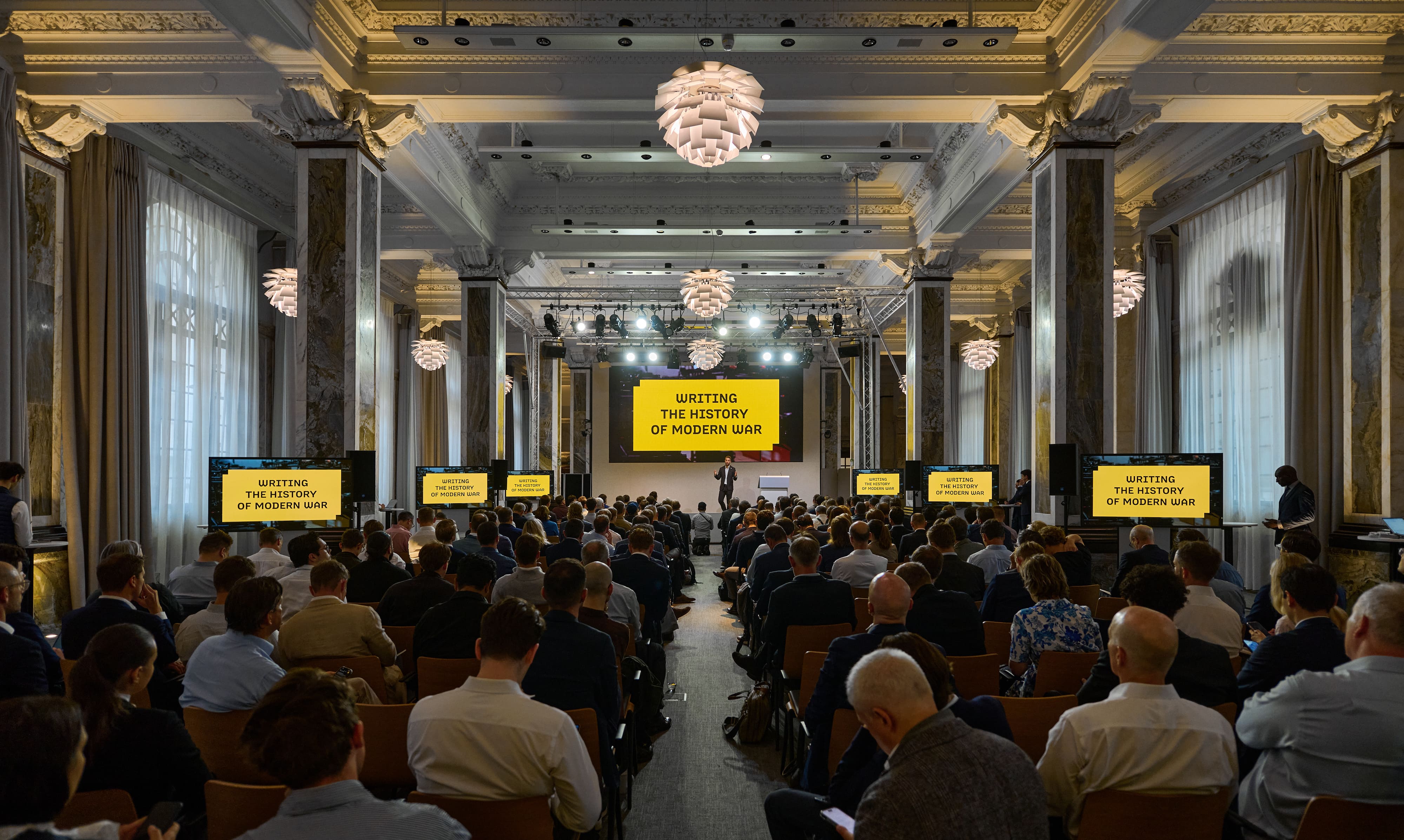
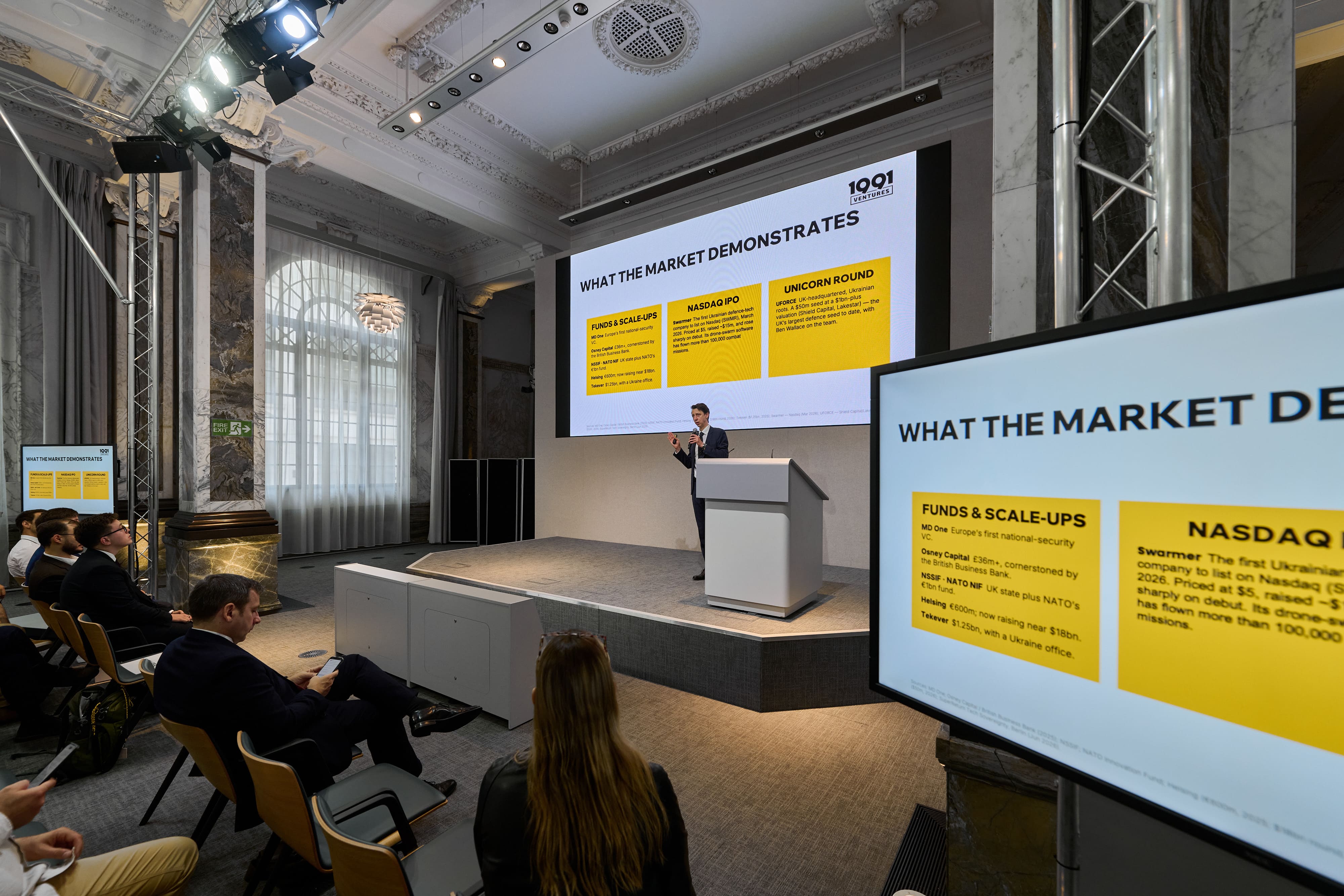
On June 3, 2026, Brave1 and 1991 Ventures co-hosted the Ukrainian Defence Startup Showcase in London — the anchor event of a three-day Brave1 UK Investment Tour. One room, ten companies, each compelling for different reasons. Early-stage startups building and testing at the frontline, where battlefield performance is the proof of concept. And growth-stage companies that have already scaled through Ukrainian market and are ready for joint ventures and allied markets entry. Both require different capital structures and different kinds of partners.
As Denis Gursky, Partner at 1991 Ventures, put it:
"These companies don't have the luxury of long development timelines — they are creating and deploying solutions in real-time, where the ultimate proof of concept is lives saved. The battlefield-tested capabilities they've built deserve global backing, and at 1991 Ventures, we want to be a catalyst for that integration."
Brave1's track record reflects how fast this is moving: $40M in investment attracted in 2024, $105M in 2025, Ukraine's first defence tech unicorn, and its first IPO in 2026, a trajectory toward $300M by end of 2026.
"The UK-Ukraine capital corridor is real, but small," Gursky told the room. "We are asking the funds here to join 1991 Ventures in investing in Ukraine to make this corridor work. Not just capital — partnerships. Ukrainian innovators are ready to create joint ventures with the UK."
.jpg)
Foreign investors have three routes in — direct investment with IP remaining in Ukraine, joint ventures, or direct market entry through local subsidiaries or MoD procurement contracts, a path already taken by BAE, SAAB, and Thales. The frameworks exist. What has been missing is a fund that knows how to navigate them. That is what 1991 Ventures is here to provide. The ten companies who pitched in London — Soloma Avionics, Offset Labs, Pai Defence, Huless, AIDronesUA, Aero Center, Himera, General Cherry, Ratel Robotics, and Trypillian — were selected because they represent what the Ukrainian defence tech ecosystem actually looks like at its best: battlefield-validated technology built by founders with serious commercial experience, operating in conditions that compress timelines in ways no other country can replicate.
As Artem Moroz, Head of Investor Relations at Brave1, put it:
"What matters in a portfolio? Clear business structures and sleek presentations — or technologies proven to work and scale in the most demanding environment on earth?" These are investable companies. The question is whether Western capital is ready to meet them."
This showcase is not a one-off event. Behind it sits something more structural: building the infrastructure of the UK-Ukraine capital corridor — the legal pathways, investor networks, and regulatory navigation that make it possible for serious capital to back Ukrainian founders at scale. Ukrainian defence tech companies are asking UK funds to move with them — not as observers, but as co-investors who help portfolio companies cross into Western markets, access procurement pipelines, and build the joint ventures that make the corridor real on both sides.
At 1991 Ventures, our mandate is specific: seed and seed+ startups from Ukraine and CEE, across Applied AI, Cybersecurity & Defence Tech, Autonomous Systems & Robotics, and Fintech Infrastructure — the companies rebuilding Europe's tech sector across its most strategic industries. The first wave of this market is already underway. The second is where the corridor gets built.


.jpg)
.jpg)

